Caleb’s Story
By Germaine Thai
Our story and experiences with parenthood
The following is an excerpt from a forthcoming book called “The Best Type of New: Poems of Early Motherhood” by Germaine Thai, a PFIC mom from Malaysia:
Liver transplant. Surgery. Lifelong medication. Words that no parent would ever want to hear. Especially not when their baby was barely 3 months old, and of a tinier build than most others.
3 Months
It was a normal Sunday afternoon. We went over to my sister’s house for her housewarming, and Caleb, our son, started developing a fever. We also noticed his eyes and skin were yellow, but we didn’t think anything about the jaundice. It felt like a small problem, something that medication and a visit to the doctor would resolve. After all, jaundice in babies was quite common.
Just to be safe, we took Caleb to a private hospital emergency room. It was buzzing with chatter from patients and their families and sounds of triage from the nurses and doctors. We took our number and sat down, waiting for our turn. Caleb curiously looked around, absorbing the environment around him and observing people as they came and went. Our turn came, and a young doctor walked in, smiling at us as she said hello to Caleb. My husband started explaining our concerns and Caleb’s symptoms, as I watched the doctor’s face become increasingly concerned.
“How old is he again?”
“He just turned 3 months old.”
“When did the jaundice start?”
“A couple of days ago. We thought to just monitor in case it went away, but it didn’t. Today would be day 4 since we noticed the jaundice.”
“Ok, and the fever? When did it start?”
“Just last night, and it went away. In the afternoon the fever started again, so we brought him in.”
“Got it, we will have to take some blood samples to run tests. The fever could be an infection so we’ll get that checked.”
“Great. What about the jaundice? Would it go away after a few days? Is there any medication to take, or maybe some phototherapy?”
“Umm.. How is the colour of Caleb’s stools?”
“Oh, it’s yellow. We were told yellow is good.”
“Yes, but is it bright yellow? Or pale yellow?”
“A mixture. Sometimes it’s bright yellow, but other times it is light yellow.”
“Hmm I see. That’s actually not very normal, as the stools of a healthy baby are normally bright yellow. I will need to refer you to a gastro pediatric doctor for further consultation. Let me just check if you need to be admitted today, or if you can head home first and come back for the consultation on a different day.”
“Admitted? Isn’t it just a normal newborn symptom? Many babies have jaundice.”
“It’s normal in newborns less than a month old, but not so beyond that.”
Our hearts sank. It wasn’t normal? A referral to a specialist? Admission? We were blindsided by the doctor’s words.
Taken by surprise, we had to be admitted. We had our regular pediatric doctor and a gastroenterology pediatric doctor assigned to us. Vials and vials of blood taken, dozens of tests ran. Caleb did an ultrasound and a HIDA scan, in attempts to identify why the jaundice was happening. It was tough having a 3 month old in the hospital, with so many lines and tubes attached to him. We couldn’t walk around with him when he was fussy, or properly rock him to sleep. The hospital was a new environment which also meant lots of adjustments.
A night in, Caleb’s tests came back and his haemoglobin was very low. The hospital suggested that we admit Caleb into the Neonatal ICU (NICU). We were scared. We already had our taste of the NICU when Caleb was born prematurely. We never thought we would end up back there again. Returning to our bedroom without Caleb for the first time since he was born was tough. The room felt so empty, and we felt so lost without our usual routine of night feeds and bouncing him to sleep. I prayed that he would be all better soon, back in our arms in the comfort of our home.
After a week, our patience was wearing thin. What was the problem? Why did they run so many tests, yet still could not find the root cause of Caleb’s infection and jaundice? Anxiety and fear had found their way into our bubble of happiness. The fever had gone down after medication and a blood transfusion solved the low haemoglobin. Wasn’t it time to go home?
The gastroenterology doctor, Doctor Chu, was curt and detached. He didn’t play with Caleb, nor did he try to be positive or comforting to us – first time parents that had to go through this series of tests and weeks of hospitalization. Doctor Chu explained to us that Caleb’s bile flow was not normal. Something was blocking the bile from flowing out through his stools (hence the pale yellow colour).
He had a couple of theories that could explain the jaundice:
Caleb had a blocked bile duct that obstructed his bile flow.
Solution: A small incision and surgery to see exactly what the issue was internally, and flush out the obstruction in the bile duct to clear the passage for bile flow. A one time procedure that would resolve the problem
Caleb was born with insufficient bile ducts. The reduced number of ducts then could not allow for bile to flow normally.
Solution: No particular solution, symptomatic treatments and monitoring.
Caleb had a rare medical condition that affected his liver function. The initial suspicion was biliary atresia.
Solution: For biliary atresia, a major surgery called Kasai had to be done immediately. If the Kasai was done late, it would be ineffective and a liver transplant might be needed.
We were shocked and paralyzed in fear. How did it escalate from a simple case of jaundice into this? Transplant? Rare medical condition? My brain stopped working and zoned out of the later information, as Doctor Chu droned on in the background about support groups and possible treatments for biliary atresia. The medical jargon was hard to grasp, especially in the state of shock that we were in. Our brains just could not process the severity of Caleb’s symptoms.
We had to decide very soon on whether to proceed with the surgery for further confirmation of the theories above. There was no time to properly process anything. Doctor Chu was throwing a hefty number out for the surgery cost, in case of a Kasai surgery (to be done together as one surgery), pushing us for a decision. His lack of empathy left us reeling with a deep sense of negativity and fear.
An emergency family meeting was called to break the news to the grandparents of both sides. We discussed options and possibilities based on the little that we knew. I was personally a wreck, tears falling down my cheeks as my mind raced ahead thinking about Caleb’s future, imagining the scenarios that could happen. Just last week, our discussions centered around a “Happy 100 days” celebration, but we’re now planning hospital visits and surgery options.
—
The surgery day came. My husband and I waited in the family holding area. The surgeon briefed us about the procedure, assuring us that he would come out before two hours to update us on whether a Kasai was needed. I could still recall that day so clearly – waiting for a diagnosis from the surgeon made every minute of surgery feel like hours. The room was too cold, too sterile. I felt like I should be praying, or crying. At the same time, I felt like I had to be strong for Caleb. He was our little warrior going through the surgery inside, fighting to go home.
Good news! The surgeon approached us about an hour into the surgery to confirm that it was not biliary atresia. It was very likely Theory 1, where his bile ducts were blocked by something that could be flushed out. They would proceed to flush out the ducts and finish the surgery. We were elated and relieved, happy to have found the problem and a permanent solution.
We were discharged a few days later with weekly follow-ups. Caleb’s bilirubin levels, which indicated the severity of his jaundice, started coming down gradually and his blood tests seemed to be trending well. We continued with life. I went back to work after 4 months of maternity leave and all was great. The only thing we needed to catch up on was Caleb’s developmental milestones, which regressed after weeks of lying in the hospital. No big deal, we knew that he would catch up anyway. We were back in our happy bubble, worrying about the most mundane things like daycare and nap schedules.
7 Months
Post the minor surgery at 3 months, Caleb was doing great. His blood tests continued to trend well and we were expecting the bilirubin levels to normalize over time. He was catching up with his growth and we were excited to introduce him to solid foods. His developmental milestones were also trending positively. For a couple of months, everything felt normal.
We had made plans to register Caleb into a daycare when I returned to work. We adjusted into a rhythm of sending him off and picking him up every day. However, similar to any parent who experienced daycare for their little ones, Caleb started to fall sick quite frequently. Each episode of sickness meant my annual leave slowly depleted, which defeated the purpose of sending him to daycare. Caleb would be fussy, unwell and cranky. Worst of all, he would lose weight every time he fell sick. We decided we would stick it out for a few months. After all, most kids just need a little time to build up their immune systems. Meanwhile at work, I struggled to adjust. I wondered how working mums could power through constant pumping while attending meetings, getting work done and everything in between. There were constant running lists in my head – things to pack for Caleb, things to bring back home from the mother’s room, things to get done for work, things to buy for the little one. The mum brain never switched off, and my brain was in constant overdrive.
Months went by. When Caleb was around 6 months, his blood tests suddenly showed a spike in bilirubin. He started becoming jaundiced again, visibly. Immediately, we were worried. That meant the supposed fix to the problem did not work, and the root cause was still unknown. Doctor Chu had a few additional theories, as we had already ruled out the initial 3 theories during the surgery. We went down the rabbit hole of diseases that were rare. We were told that it was likely something genetic. Doctor Chu’s worried expressions during our hospital visits didn’t sit well with us. We knew it was going to be a tough uphill journey from here on, as all paths for rare diseases were.
Constant visits at the private hospital started to burn a hole in our pockets. Somewhere in the fine print of the insurance policy that we bought for Caleb, was a line that stated “all congenital diseases are not covered within the policy”. Most, if not all, genetic diseases would be considered as congenital as chromosomal abnormalities occur before birth. This broad rule applied for all insurance companies in Malaysia, as the government does not mandate a compulsory inclusion of these conditions into the policies. Unlike some other countries, the government funding to support rare genetic conditions was also very limited in Malaysia. We knew that the chances of getting any financial support in the long run would be almost impossible.
On top of that, on the expertise and experience fronts, there was only one gastro pediatric doctor in the private hospital we went to, and we desperately wanted a second opinion. There was a big “what if” lingering over us, wondering if this grave diagnosis of a rare disease was wrong. Google became our best friend, as we searched for experienced doctors that we could consult. However, we realized that unlike restaurants or dentists, there was no proper rating for doctors online. How would we know who to trust for a second opinion? How do we find the best doctor for Caleb?
We asked around with friends and family, matched them with referrals from Doctor Chu and selected a doctor from a public hospital. In Malaysia, it was a known fact that public hospitals had the best set of doctors. The cases and exposure they get from treating mass volumes of patients at public hospitals meant that they had a higher chance of treating complex and rare conditions. There was a team of experienced doctors that discussed patient cases together, and that comforted us a lot.
Professor Lim was our attending doctor. He was a ray of sunshine, one we so desperately needed. His calm and methodical approach to explaining Caleb’s condition assured us that we would figure things out, together as a team. Caleb was admitted for two weeks into the public hospital. Again, Caleb had to do dozens of tests as we went through the process of eliminating possibilities and conditions – each more rare than the last. Citrine deficiency, Alagille syndrome and Progressive Familial Intrahepatic Cholestasis (PFIC) were among the suspects causing the jaundice. Most of them were liver related genetic conditions. A liver biopsy, more ultrasounds, blood tests and even an eye test.
After a long two weeks, we had whittled it down to a possible diagnosis: PFIC, subtype 1. We knew it was a condition that was likely, but it was still so difficult to hear. A bitter pill to swallow, one that refused to go down my throat. We were referred to the genetics department, as they needed to send Caleb’s blood samples to Korea for confirmation of the diagnosis. The RM5,000 genetic test was a broad one, going through the various genetic strands to find anomalies. Malaysia did not have the capability yet to run such broad genetic testing, as genetic studies in Malaysia were quite new. By this point, we had already racked up hospital bills of RM20,000. It was an unexpected cost beyond a baby’s already expensive expenses of diapers and milk powder, but we needed to get to the bottom of his diagnosis. We needed to have some answers, once and for all, so that we knew what we were dealing with. The results would come back in a couple of months.
With this new diagnosis, we knew that Caleb would be better off at home, away from other children to avoid falling ill so often. We procured a helper and pulled him out of daycare.
10 Months
Caleb’s smiles and antics powered us through the months. A clever and cheeky boy, at 10 months old, he could now crawl around quite quickly and give giggles to things that he found amusing. His love for food continued growing as he tried different flavours. Blueberries and bananas became an obsession. “Wheels on the Bus” became our daily anthem (cue the parents who sing the same song a hundred times on repeat). He started developing stranger danger, which showed us that he was quite introverted, potentially due to the lack of exposure to other children his age.
As we waited for the results of the genetic testing, we started research on a few rare genetic diseases, particularly on PFIC. As we read about the disease, we understood that a lot was unknown at this point. PFIC is estimated to affect 1 in 50,000 or 100,000 births. Translating that to the current Malaysian population, that would mean a rough estimate of 500 Malaysians affected by this condition across all ages. Our doctors in the public hospital have only seen or heard of less than 10 cases collectively in Malaysia, across the few known subtypes of PFIC. Many genetic conditions suffer the same fate of limited information, as the world continues to develop research and understanding on the complicated field of genetics. I thought many times on whether I would prefer the outcome of naming Caleb’s root cause as PFIC, or the outcome of not getting a root cause at all. I guess it would be better to name his condition. The little information out there would be better than none at all.
The diagnosis would not change his treatment options. Caleb’s treatment was symptomatic, with the worst symptom being this unbearable constant itch, medically known as pruritus. The itch was internal, as his body had difficulties reabsorbing bile, which caused the bile salts to then recirculate in his blood stream and cause internal itch. He had to have mittens on all the time. Without them, he would scratch and rub any exposed body parts until they bled. This constant, horrible itch happened around the clock, and through the nights, sleep was not peaceful. We would wake up to crying bouts, strewn mittens and bleeding patches on his face or inside his ears. As he became more aware of the itch and how to scratch his body parts in attempts to alleviate the itch temporarily, bleeding and scabs became a normalcy in our lives.
We tried everything: lotions, creams, cold pillows, hot showers, wet towels, special scratch items and all the known medications we could get our hands on in Malaysia. Some things worked for temporary relief, others had no effect at all. There would be days of severe itch, where nothing could be done to soothe his crying and fussing, as well as his scratching of exposed body parts. On those days and long nights, even screen time barely worked to drag Caleb’s attention away from the itch. It was tiring for us, but tormenting for Caleb. His meals would be disrupted by the bouts of itch, and growth remained slow and below the national growth curve. He couldn’t play properly, nor could he get peaceful naps beyond 1 hour – not even when he was exhausted from a night of minimal sleeping. There were nights of barely any sleep for all of us, which resulted in perpetually tired parents and a very cranky baby.
And then there were days that seemed somewhat normal. Minimal itch meant great appetites and good moods, laughing and smiling through his play times. We could get about 5 to 6 hours of sleep at night, although still broken by milk feeds and times of itch in the night. We brought him to weekend enrichment classes to expose him to music, language and socializing with a few other children his age. During the good days, he really enjoyed classes and participated actively, swaying to the music and playing with the toys. We tried to figure out correlations and causations of his routine to the itch, but in the end concluded that it was cyclical and random. There was no clear trigger, and there was no clear treatment.
At this age, many other babies were doing baby-led weaning and mastering their pincer grips. For Caleb, meal times were a hit or miss occasion. The itch made it unpredictable, so we prioritized nutrition over everything else. Meals were fed as quickly as we could to ensure that he was full, then we allowed for some practice on self-feeding if his condition on the day allowed for it.
Months of limited sleep and handling Caleb’s itch started to wear us down. As parents, it was difficult to accept that we could not do much to help Caleb. Watching him suffer with the itch was very difficult. All we could do was hold him and wipe him down with a wet towel, until the severe episodes tided over. It sometimes took us hours to get over an episode, just to have the next one start an hour later. Mentally and physically, my husband and I were running on low battery. We wondered whether it would get better. I knew we would survive it somehow – we had to, there was no other choice, but at what cost?
We were very lucky to have our village of supporters. Caleb’s paternal and maternal grandparents, along with our extended families, gave us so much support and love. They helped to take care of Caleb on weekends so we could nap and run errands. This allowed us to get some much needed alone time to recharge and refuel. Our friends would plan meetups around our difficult time slots, which we really appreciated. Close friends helped us pore through social media and China-led research documents to see if there were new developments. Colleagues and our bosses gave us the space we needed and flexibility to care for Caleb. Despite the whole experience being so tough, we were so loved and very blessed. Our village kept us sane and kept us going.
The day came for us to collect the genetic test results. We were part nervous, part curious walking into the doctor’s office. It was confirmed: Caleb had PFIC subtype 1. The doctor went on to explain about the mutation of the gene and how Caleb inherited one part of a mutated, recessive gene from both of us. Again, we found ourselves caught in this new world of understanding the basics of genetic mutations, with medical jargons that kept piling up. It felt overwhelming and underwhelming at the same time to get his diagnosis confirmed. A deep sense of sadness for the lifetime medical management that Caleb probably needed because of his condition. A bit of relief that we finally made sense of the root cause of his jaundice and itch. A huge sense of fear in handling this rare genetic condition, with the little information that was known in the world today about it.
We both read up more about PFIC and it was a really scary read knowing that it was going to be our reality for Caleb’s lifetime. We were living with some of the symptoms already: the jaundice, horrible itch (pruritus), fat soluble vitamin deficiencies and growth issues. We learnt that Caleb’s liver needed close monitoring through constant blood tests to ensure that his liver functions were still good. There was a big chance that Caleb would need a liver transplant within the first decade of his life, as the bile acids that could not recirculate properly within his body would slowly build up in the liver cells. The accumulation of bile acids in the liver cells was toxic and would cause damage to these liver cells, causing the liver to slowly fail. On top of these, for PFIC type 1, there were potential hearing problems, chronic diarrhoea, chronic cough and irritation of the pancreas. Everything needed monitoring and checks.
The processing of emotions after the diagnosis was really tough. I cried in the shower, long and hard for days. I kept asking the “Whys”. Why Caleb? Why us? Why did this difficult path seem so impossible to walk? Why couldn’t he just grow up like other little boys? Why did he have to suffer so much? I was in a daze of denial for a week, tearing when I spoke about it to others, while trying to come to terms with his condition. No one truly understood how difficult it was except our immediate families, who have taken care of him personally. The condition felt isolating and incredibly lonely, as the rarity of it meant I couldn’t even speak to parents in Malaysia who had prior experiences. Acceptance and grief came in waves, tiding me under when I was alone for a few minutes. Defeat mixed with heartbreaking sadness knowing what was to come. Fear to hope for an outcome that might not be attainable.
Something changed after a few nights of shower cries. There was a determination and hope within me to push for change. A feeling that we were dealt this card to help raise awareness for this community, to try and better the lives of the little children who were also gastro patients. My husband’s finding of a new water-soluble vitamin from Europe actually opened a new door for many other patients, as this one vitamin replaced individual doses of vitamins A, D, E and K for patients. I was hopeful that there would be more findings that could help the wider community who were also struggling through similar diseases.
Through reading about PFIC, we stumbled upon the PFIC Network. The PFIC network was a global community hub for patients, caregivers and anyone who wanted to know more about PFIC. The website was easy to understand and we were amazed by the advocacy globally that was happening, specifically for this condition.
We were added to a Facebook group with hundreds of other families that had gone through the same journeys. Most of the members were from the United States, Canada and Europe. Scrolling through the photos and posts gave us so much more perspective on the disease. Everyone was really welcoming, sharing their own experiences, wins and losses. The support was incredible. There was no need to explain how horrible the itch was, or how tired we were as parents. The network knew and understood more than anyone else. It meant the world that we had a group of experienced parents to ask information from. Questions posed in the group got responses from around the world, with real experiences and advice from different hospitals worldwide.
Suddenly, the unknown nature of PFIC didn’t seem as daunting anymore. We had small villages dotted across the world, championing awareness and research for this cause. Connecting with some of the families through the network has been amazing for us to really accept Caleb’s diagnosis. We found hope in pushing through.
1 Year
Time passed, quickly and slowly at the same time. The days were long, but the months felt short. The fourth trimester that seemed so difficult at that time felt like ages ago, with the intensity of caring for a newborn dulled by time. Each day that was difficult, passed. A new day always came, and every day brought us a lot of joy and memories as a family.
Whenever possible, we wanted Caleb to grow up like any other kid. We took him out to malls, restaurants and holidays. He had swimming lessons for a couple of months, but we had to stop that as he kept falling sick. Family and friends met him and made him feel loved. Caleb picked out his own toys. Boundaries were set when he threw items. He grew up alongside our dog and we had to teach him that pulling the dog’s tail was wrong.
Caleb was turning one and we wanted to do a celebration for him. We invited 80 of our family members and friends to join us. The grandparents bought him a little Tigger outfit, as he was born in the year of the tiger. We decorated the cafe with safari-themed balloons and items, and ordered a customized cake for him. It would not be an occasion that he would remember, but it was a celebration for our little champ who smiled and laughed so much despite his condition. We wanted to make him feel special for the day.
Hospital days still continued to be a part of our regular routine. We spoke to our doctor about the treatment possibilities, especially in alleviating the pruritus for Caleb. There were many days of walking into the doctor’s office with blood dripping down his face, caused by his constant scratching or fresh wounds from a difficult night. Besides all the known medications available in Malaysia (of which we had tried them all), there were no other non-invasive options.
The next steps would be to explore surgical options, which also had levels of risk. A less severe surgery that had a decent success rate was biliary diversion; rerouting the body circuit to expel out some bile and reduce the amount of bile acid recirculation in the body. Bile acid was believed to be the main cause of his itch. This would technically solve the pruritus and delay or even prevent the liver from failing. The other option for surgery would be a liver transplant, which has been the most successful method globally of curing pruritus and improving quality of life for patients, but also has the highest risk. This option would mean lifetime immunosuppressants, after undergoing a major surgery with many possible complications. The surgical options sounded scary. We shuddered at the thought of Caleb going into the operating room yet again. At this point, we knew the options were there but we were not strongly considering them yet.
From the PFIC community, we knew that there was a new medication available. This medication was an IBAT (ileal bile acid transporter) inhibitor that works by blocking the reabsorption of bile acids in the small intestine, specifically in the ileum. Within the community, we saw parents commenting about the efficacy of these drugs for their children and it gave us a lot of hope. If the medication was effective for the child, it would be effective to stop pruritus and would work like a biliary diversion, without the surgery. There were only two such drugs in the global market, both approved in the United States by the FDA (Food and Drug Administration). However, there was no way of getting these medications into Malaysia. When we spoke to our doctors, it sounded like an almost impossible task, or at least one that would take a really long time.
These are orphan drugs currently given on a compassionate basis to patients, but both companies were aiming to commercialize these drugs in the future. When they do, the cost would be too high for us to afford, as medical insurance and the government aid both would not cover this cost. We knew that the costs were piling up. Just for check ups, medication and supplements related to Caleb’s condition, we were spending RM500 to RM1,000 a month. He also needed a special milk formula for easier absorption of fat, which costs 1.5 times higher than normal milk powders. Despite all these facts, we wanted Caleb to try this IBAT inhibitor. If it worked for him, we would figure out the cost later.
My husband was really good at all the medical terminologies and understood the research papers on PFIC a lot better than I could. Somehow, as he was reading about these orphan drugs, he stumbled upon an email for one of the pharmaceutical companies producing this IBAT inhibitor. He took a chance and emailed the contact person linked to the research paper, explaining Caleb’s condition and our inability to get the drug in Malaysia. It was a really slim chance of even getting a reply. Surprisingly, after a couple of days, we did get a reply, and a really positive one! We got redirected to conversations with the Asia team, discussing options. After a few months of discussions with both the pharmaceutical company and our doctors, we managed to obtain compassionate use of the drug via Singapore. We were ecstatic, hoping that this might be life changing for our little family.
We arranged to get the drug through Singapore, where the drug already had approvals and doctors were actively prescribing this orphan drug to other patients. This meant that we had to travel into Singapore every 3 months with Caleb. The pharmaceutical company was collecting data points to determine the success of the drug for multiple rare liver conditions. It was a difficult task to get statistically significant sample sizes, as the number of patients in these rare conditions were so small. Amongst patients with PFIC, some had already undergone surgical options or transplants so those were also not the target audience to determine the orphan drug’s success. An additional challenge was that the medication had to be transported back at refrigerated temperatures. We started off logistically arranging ice packs for the journey and ended up buying a special container used to transport insulin for easier transportation.
We were so grateful to the doctor in Singapore who accepted our case. Professor Mary wanted to help as much as she could, and when our doctor in Malaysia reached out, she gladly invited us over and made arrangements for the medication accordingly. Traveling with a baby was challenging but Singapore was great, with the efficiency of their transportation hubs and a spectrum of activities for toddlers to explore. We were excited to start this medication – anything at all that could help little Caleb live a life of better quality. At this point, his poor sleep quality and relentless itch had caused both his physical growth and his development to be severely behind his age milestones. I could not even begin to imagine the feeling of continuous itch that could not be scratched away. Caleb’s strength and ability to even function somewhat normally amazed me.
Officially, we started Caleb on the orphan drug when he was 1.5 years old. We knew that it would take a couple of weeks or even months before it showed any results, with a commitment that we would try it out for 6 months before reaching any conclusions. A few weeks in, we saw slight improvements to his pruritus but it wasn’t significant enough for him to stop scratching. He was experiencing less episodes of intense itch, though still covered in wounds and scabs from bleeding scars. Praying for a miracle, we continued on with the Singapore commutes, Malaysia checkups and this orphan drug.
It was rewarding to see Caleb take his first steps. He was at an age where a vehicle was almost always in his hand, obsessed with all objects with wheels. Trains and construction vehicles were newfound loves. We took him out to petting zoos and cafes, as well as play dates with friend groups. We often got questions about his scars and wounds, but it was quite difficult for us to articulate his condition in a few short sentences. My husband and I caught up on sleep when possible on weekends, as we were both working parents. We had to be selective on meetups with friends and I did not have the time and energy to really kickstart my fitness routine postpartum. I was grateful to have a great support system, which enabled me to go for some work travels and a few promotional activities for my first book. All in all, it was a tough year trying to juggle everything at the same time.
Month 5 of the orphan drug usage came about and it was still the same. Minimal efficacy, still bad pruritus for Caleb. At this point, we knew that this orphan drug unfortunately did not work for Caleb. It was not going to be our salvation. It was time to consider surgical options if we ever wanted to improve his quality of life.
We debated long and hard as parents on what the right move was. Would we keep things status quo until his liver really failed, or try the biliary diversion? Would it be right to put Caleb under the knife for a chance at a better life? How long would we be able to live with the pruritus, and how long should Caleb suffer like this before we explored surgical options? There were no right answers. We voiced this debate to Professor Lim and he gently advised us to wait for the outcome of a multidisciplinary team meeting that he would set up to discuss options for Caleb. The meeting would include surgeons, the Malaysian team of doctors and our Singapore doctor. Professor Lim would also reach out to contacts in the United Kingdom to get their thoughts, as they had more experience dealing with PFIC.
2 Years
We were moving ahead with the biliary diversion, which was the recommendation of the multidisciplinary meeting. Weeks of deliberation within our family and with the doctors firmed up our decision. Now that we had decided to proceed with the surgery, we still had to decide on the type of surgery, as there were various types of biliary diversions. Would we do an internal diversion or an external one? An external diversion would mean a stoma bag for life, but it had better known success rates over the years. Internal diversions were a newer solution which did not have as many success stories yet. We felt that an internal diversion was a better option for quality of life as a stoma bag would be very difficult to manage for a toddler.
While researching the different types of internal diversions, my husband stumbled upon a research paper detailing a new method from this hospital in Beijing. The paper specifically quoted that this method was successful for PFIC type 1 patients, with a reasonably significant sample size over the past decade. It sounded like a dream: finding this solution specifically tailored for Caleb’s rare condition, with long term results that were promising, including the key result of patients avoiding a liver transplant with this surgery. We were sold.
Questions on whether this hospital was reputable came about. We had relatives in Beijing so we asked around, and all checks came back positive. The hospital was one of the bigger pediatric public hospitals around. We floated the idea of doing this type of surgery in Malaysia to our team of doctors, but the type of surgery that was recommended here was the more conventional way of internal diversion. Torn on what to do, on a whim, we shot an email to the Beijing hospital. There was a doctor’s email that was listed on the research paper so we tried our luck. I assumed that the cost of doing the operation there would be exorbitant for foreigners anyway, but we had nothing to lose.
Two days later, we got a reply from Professor Mei, the doctor from the Beijing hospital. She was very detailed in her explanations and reviewed Caleb’s case thoroughly. Professor Mei welcomed us to Beijing to do the surgery there, and surprisingly, the cost of performing the surgery in China was only slightly more expensive than doing the surgery in Malaysia. Finding that this was an actual possibility, we debated long and hard about the pros and cons of Beijing. We wouldn’t have our village in Beijing, language was going to be challenging and follow-up communications might be difficult as this hospital did not have a working relationship with our current Malaysian hospital. The pros outweighed the cons though, as they had a lot of experience with internal diversions (Malaysia has never done an internal diversion before) and we could live with my uncle who was based in Beijing.
We decided to go for it. We had to do what we thought would give Caleb the best fighting chance. The 2 months leading up to the journey was hectic. Flights were booked, plans were made. We had to communicate with both Beijing and Malaysia doctors to make sure arrangements were in place. Our Mandarin levels were elementary, so we knew that translating medical terms in Mandarin was going to be a challenge. Only Professor Mei and one other doctor could speak English, which meant most of the staff would likely be conversing to us in Mandarin. We were supposed to go over for 2 to 3 weeks, with the surgery and his recovery time factored in. Packing for a few days of vacation was already tough; packing for weeks at once was a whole new ball game. China had their own apps: payments, ride-hailing, food delivery, communications, maps. Everything had to be downloaded beforehand and ready for our travels.
The day of our flight came quickly and it was the week of Christmas. It ended up being one of the most difficult flights we had ever had with Caleb. He was cranky due to lack of sleep going into this midnight flight and extremely itchy. During the flight, he kept scratching and rubbing his face, which then resulted in bleeding from a wound on his face. We had to press down on the wound to stop the bleeding, but when we did, he screamed. Surrounding passengers were staring at us; annoyance from the screaming baby and curiosity in what was happening. We had a pile of bloody tissues on the tray table and an inconsolable toddler. This went on for hours.
Beijing was in the middle of its winter season, which meant we had to prepare layers of clothes for our trip. The weather was windy and dry, fluctuating between 0 to 5 degrees on most days. We were grateful that my uncle had a car and drove us around. The next day, we went with my aunt to check in at the hospital. We were shocked at the sheer amount of people walking around the hospital lobby – easily triple the volume of patients we had back in Malaysia. It was overwhelming as people were pushing forward on their way, and we had no idea where to start or how to register.
Somehow, we managed to get everything sorted and found our way to the children’s ward. There was no bed available in the rooms, so we were given a bed in the corridor together with a small stool. How were we supposed to sleep in the corridor? The bed was only large enough for Caleb, which meant that I had to somehow fall asleep on the stool. I peeked into the rooms: 6-bedders with a shared bathroom, with only one parent permitted for each child. This again shocked me, as the size of the room would typically be a twin room back in Malaysia.
The surgery took place two days after we checked in at the hospital. Professor Mei explained the procedure to us and mentioned it would take two hours. On the day of the surgery, we carried Caleb to the operating theatre before handing him off to a nurse. There was nothing else we could do except wait and pray. It was exactly like the movies, where they had a room for all the parents to wait and a large TV screen showing the status of all the surgeries. The atmosphere in the room was charged with emotion. Many parents had tears down their cheeks, others clung onto each other. We had to be strong – our little warriors were fighting fiercely inside the operating rooms.
Two hours later, Professor Mei came out and told us that the surgery went well. We were so relieved. Caleb would go straight into the ICU for observation and transfer out to the wards after a few days. We wheeled him down to the ICU, but we could not visit him while he was in the ICU. The only form of communication was a WeChat group with reports twice a day of whether Caleb had eaten, pooped or had any fever. Beyond that, we couldn’t even get pictures or videos of him as the nurses in this public hospital did not have bandwidth. It was even more challenging as we could not get a proper hold of the doctors. Professor Mei had multiple surgeries throughout the day and she had to do clinics and ward rounds, which meant replies to our messages only came in early in the morning or late at night. We were worried and there was no means to get updates on Caleb’s condition, which made the worrying a lot worse.
A few days later, Caleb was well enough to be transferred out to the 6-bedder wards. We were so happy to be able to see him and initial blood tests seemed to be trending in the right direction. As only one parent was allowed at a time, my husband and I did 12 hour shifts. It was only for a few days anyway and we wanted Caleb to be with someone familiar. The wards were uncomfortable, to say the least. 6 children meant a lot of crying, screaming, loud noises and worst of all, viruses. Caleb could not rest well with all the noise and after a day, started to get a fever. We monitored him closely and tried our best to get updates from the doctors, who only rounded the wards once a day in the morning.
It was almost four days in the ward and according to the initial timelines given to us, we were supposed to get discharged soon. We kept asking when we could go home, but the answer was always the same. The doctors were still monitoring his blood tests before deciding. We were half packed to go home soon from the hospital and I was on night duty as usual. There was a routine of doing the nebulizer and his medications.
Suddenly, at 11pm, a nurse came in and spoke to me in Mandarin. I caught the main message: Caleb was supposed to go into surgery tomorrow, so he had to fast from 2am onwards. But.. wait a minute? What surgery? We were supposed to be discharged and cleared to go home soon. What was happening? Did they get the wrong patient?
My confusion on the situation was apparent on my face. However, the nurse thought that I did not understand her instructions. She asked to call my husband, who had a better command of the Mandarin language. I knew at this point that he would likely be asleep but I got my uncle to wake him up. I needed someone who could ask the details and get to the bottom of this. After a long ten minutes of my husband speaking to the nurse and then to the doctor, we were notified that Caleb had to go in for a second surgery, scheduled for the next day. We were shocked. The doctor mentioned that Professor Mei would brief us in the morning and give us more clarity.
During the briefing, Professor Mei mentioned suspicions of Caleb having cholangitis, which meant that his bile duct system was inflamed due to an infection. His bile flow was not great and his bilirubin levels were still high, and if we did not proceed with this second surgery, his fever would not come down and the infection would not clear. The second surgery was to add an external diversion on top of his internal diversion. The external diversion from China was different from the ones we knew from the Western world. Instead of a stoma bag, they would insert a tube through his belly button. Every day, we extract the bile out twice a day through a catheter. As parents, we were overwhelmed at this turn of events and the speed of decisions was dizzying. It did not seem like we had a choice on the second surgery as there was no alternative way to get Caleb’s fever down or reduce his bilirubin levels. Again, we went back up to the operating theatre with Caleb.
Our hearts were heavy with worry as this second surgery was unexpected. There was no time to digest our emotions. The second surgery took another two hours and this time, we were advised to leave Caleb in the ICU for the whole week of recovery before we flew home. We changed our flights to accommodate a later date. There was nothing much we could do for Caleb while he was in the ICU and we tried to get updates when possible from the doctors.
Nearing a week in the ICU, we asked the doctors when exactly we could bring Caleb home, but the news was not positive. With the second surgery, the bilirubin levels should have dropped significantly to almost normal levels. Bile would ideally be extracted out at reasonable amounts daily through the catheter. However, his bilirubin remained high. Very little bile could be extracted out through the external diversion. This meant that there was something else internally that was causing his bile flow to be blocked. The solutions from both surgeries were not working. Worst of all, during the surgery, there was a liver biopsy done and Caleb’s liver was not looking good. The damage was already at Grade 3, and Grade 4 was when the liver would stop working. Professor Mei was worried about Caleb in his current condition. She strongly advised us to fly to Shanghai instead of heading home, to seek further advice from a world renowned liver transplant team there on whether Caleb needed urgent liver transplant.
Things were spiraling so quickly. There was no time to stop and really process anything. Before we could even decide, the Beijing hospital team had reached out to the Shanghai hospital, making the arrangements for us to fly over for an assessment. The Beijing side was extremely cautious, making sure we had ambulance rides to and from the hospitals in both cities. We canceled our return flight to Kuala Lumpur, as we did not know how long we needed to stay in Shanghai. We were lucky that we decided to apply for visas, which allowed us to stay for a maximum of 6 months in China. All our plans were up in the air. Caleb was quite weak after two surgeries, and even more yellow and jaundiced that he was before the surgeries. We were extremely worried and hoping for the best. Honestly, we were quite traumatized with the Beijing hospital experience and we just wanted to go home.
The Shanghai hospital was a world of difference. It was also a public hospital but this particular block was recently refurbished to serve as an international liver transplant center. It felt even nicer than our private hospitals back in Malaysia and best of all, the doctor whom we communicated with was from Malaysia! We were so glad to have a doctor who spoke in English and he was really responsive on WeChat. Dr Yang welcomed us on a Saturday and showed us to our double room. We had our own bathroom! I was so happy I could cry. Caleb was a patient on one bed, and my husband was a patient on the other.
Both my husband and I were patients this round as we had to undergo tests to check for suitability of being liver donors for Caleb. The liver transplant can only be done with a living donor for overseas patients. As the liver is an organ that regenerates, the donor was usually one of the parents. The beds were much bigger than the Beijing ones and I could easily fit into a bed with Caleb for the nights. This hospital also had working relationships with our hospital in Malaysia, as many patients were sent over from Malaysia to Shanghai for liver transplants.
We immediately felt more at ease. Gone were the days of not being able to communicate with the doctors. Here, the doctors came at least twice a day and we could reach Dr Yang directly on WeChat. The nurses couldn’t speak much English, but the Mandarin in Shanghai was much easier to understand than the accent in Beijing. The number of patients were much less, which meant the nurses had time to be more patient and understanding with our limited Mandarin. Over the next couple of days, we did blood tests, CT scans, MRI scans, ultrasounds and more. After assessing Caleb’s condition, Dr Yang said he was stable and able to fly home. His liver, while not great, would be able to hold out for a couple more months at least.
We were advised to proceed with the liver transplant as soon as possible though, as the bilirubin levels for Caleb were extremely high. He was also really itchy and quality of life was a huge consideration, given the fact that a transplant was not avoidable anyway in the near future. My husband was the more suitable donor.
After a week in Shanghai, we booked our flights home, just in time for Chinese New Year. We would compile all the documentation needed for the liver transplant back home and send them over for approvals. The approvals would take a few months, as it had to go through both the Shanghai state government and the National Health Ministry in China – tight processes that ensured that the sales of organs were stamped. We were just very happy to be flying home at long last, after an emotional few weeks in China.
I liked that we had a plan: once approvals were done, we would fly back for the liver transplant.
2.5 Years
The approvals took us four months. In that time, we managed to make sufficient preparations for our upcoming trip back to Shanghai. We knew that we would be staying for a month or two this round, as the transplant was a major surgery. Caleb needed at least 3 weeks of recovery time before he would be fit to fly home. Work arrangements were discussed and we would be on unpaid leaves for a while. We had a little dog at home so we sorted out care arrangements with my sister. Leading up to the surgery, we had biweekly checks at the hospital to ensure that Caleb’s liver was doing okay. Our focus was to let him gain as much weight as he could. Weight loss was expected from the surgery, so any weight gain would hopefully make his post-surgery recovery faster.
We were incredibly grateful for our families; they kept us strong and steadfast while we planned for Caleb’s transplant journey. Cost was another worrying factor for us. The transplant alone was estimated to cost us RM150,000, if there were no complications. We had already spent RM100,000 in December from our month in China previously, and with the unpaid leaves piling up from this trip, we were worried about our finances. We knew we could not qualify for a full grant for the transplant, as we were both working with decent salaries. When we reached out to a foundation for help, we were blessed to have gotten RM60,000 in donations from the public within a few weeks. This amount would be incredibly helpful for us, as medication post-surgery would also be very costly. We vowed to return the favour and help other families in need once we stabilized our finances.
In May, we flew back to Shanghai for the liver transplant. My in-laws flew with us to help with errands post surgery. My parents were supposed to fly in a few weeks later, to help us with the second month if we stayed on for that long. This time around, we knew exactly what to expect. Both the hospitals in Malaysia and Shanghai had briefed us on the surgery and all the procedures, tests and follow-ups. It was going to be a long road ahead, with constant lifetime check-ins back in Malaysia to ensure that Caleb and his new liver were doing okay. Mentally, we were a lot more calm and prepared, having spoken to some parents of kids who had undergone transplant and understanding how life changing a transplant could be for Caleb.
Dr Yang greeted us at the hospital. The liver transplant was scheduled for 3 days later, with some baseline tests to be done before that. Everything went smoothly and even Caleb was quite calm in the hospital. The day of the surgery came quickly. It was a really long one; 7 to 8 hours in total. At 8am, Caleb and my husband, who was the donor, were wheeled into separate operating theaters at the same time. One group of doctors would operate on the donor and extract out 20% of my husband’s liver. At the same time, the second group of doctors would operate on Caleb and remove his entire liver. Once the donor’s liver has been extracted, it would immediately be inserted into Caleb as his new liver. The liver is the only organ in the body that regenerates, and within 6 months, both the donor and recipient’s livers would have grown back to the sizes that are needed for bodily functions.
I kissed my husband goodbye and stayed with Caleb, whom I had to accompany downstairs to the operating theater. I was glad that I was not alone for the wait as my in-laws provided a lot of moral support. The doctors were slightly worried about adhesion for Caleb’s surgery, as any prior surgeries would leave scar tissues and potentially cause organs to stick together. As the doctors cut through the layers to reach his liver, if adhesion was really severe, there would be risks of excessive bleeding during the surgery or damage to some of the organs. It was going to be a long day ahead, but I knew that both of them were in the best hands.
Just slightly past 11am, 3 hours into the surgery, Dr Yang came out to show me Caleb’s native liver. It was huge: as big as two palms of my hands, which was surprising to me as Caleb was only 9kg. The liver was a mix of dark red and black, whereas a healthy liver should be light red in colour. At noon, my husband was out and moved back into our room for recovery. He was groggy and in pain, with an expected recovery time of a week. After a week, he would get discharged as a patient if all was well. For Caleb, there would be a week of monitoring in the ICU after the surgery. Similar to the Beijing hospital, we would not be able to see him during this week. Once Caleb was stable, he would then move back into our room for the remaining few weeks before we could fly home.
Finally, at 4pm, Caleb was done with surgery. Everything went smoothly and according to plan. Relief flooded through me, together with a deep sense of gratitude for my husband, the doctors and our amazing support system.
China was a country that believed the fastest way to heal was to move and walk around, instead of relying on painkillers. After two days of bedrest and IV painkillers, my husband had no oral painkillers prescribed by the hospital. We bought some Panadol, which he took for the painful nights. It was amazing to me that the painkillers were cut off so abruptly for patients, as I remembered vividly being on oral painkillers for a week after my C-section. My husband slowly but steadily started gaining more strength and mobility. By the end of the week, he was moving around on his own. Caleb was also recovering well in the ICU. Dr Yang kindly sent us videos daily and during his ward rounds, he would tell us that Caleb was behaving so well in the ICU.
In the rooms next to us, we realized that there were two other Malaysian children who were also undergoing liver transplants. Our three families bonded over the shared experiences. We understood a bit more about the different liver diseases that brought each of our families to Shanghai. It felt so nice to chat about common topics, with all of us heading back to the same hospital in Malaysia for follow-ups. Each child had different complications and symptoms, but as parents, we all went through the same arc of trying to avoid transplants, and years of medications and hospital visits. It was an unspoken bond formed by worry and uncertainty, both from past events and imagining the future of our children post-transplant.
After 6 days of ICU monitoring, Caleb moved back into our room. He was energetic and happy, with an itch that was minimal compared to pre-transplant times. Caleb looked so much better than his condition in Beijing. Despite a long scar across his belly, he was active and moving around. I was amazed at his pain tolerance, but at the same time, he must have been enjoying the lack of itch that used to blur all his senses. Week by week, his recovery was strong. His blood tests finally showed a normalization of the bile acids and bilirubin levels (never before since he was 3 months old), with his skin visibly becoming whiter as the weeks went by. We expected to stay in Shanghai for 6 to 8 weeks this time, but in the end, we were cleared for discharge in 3 weeks! We were eternally grateful for the Shanghai team’s care. Our Beijing experience made us feel like a lonely ship out in a rough storm, but this time around, Shanghai was a big, steady ship in calm waters.
We were asked to check into the hospital in Malaysia as soon as we landed. A short 3 day stay at the hospital assured us that everything was good in terms of Caleb’s recovery. We could finally bring Caleb home! We were very blessed to have had a smooth sailing recovery journey post-transplant, as we knew the other children had complications that kept them in both Shanghai and Malaysia hospitals for much longer.
Caleb was a changed child. He could now sleep peacefully at night, which meant we could finally get full nights of sleep as well. Because he got enough sleep, his days then became a lot more play-based instead of nap times. The challenge was different, having to figure out activities and ideas to occupy his time for the whole day. Caleb picked up many of his motor skills quickly and has progressed so much in terms of his ability to independently perform tasks on his own. His laughter and smiles filled the air, along with the occasional tantrum – a hallmark of the terrible twos. We loved every moment of it. This was what it felt like to raise a normal, healthy kid. It was, and is, a remarkable turning point for our whole family.
Hospitals are still a part of our routine, as were medicines. We are currently 3 months post-transplant. Caleb has so many different kinds of medications: immunosuppressants, antibacterial, antiviral, antifungal medications. On top of that, he has iron and vitamin supplements due to deficiencies. We have a total of 8 different medications and supplements to feed him daily, but he takes them like a champ. Blood tests are weekly and we have to be under close monitoring to adjust medication dosages when necessary. Too much of the immunosuppressants will be toxic for Caleb; too little and we face the risk of his body rejecting a foreign liver. Caleb understands words a lot better, and has managed to overcome his fear of doctors and nurses. He now allows the doctors to check his body at every visit, when previously, he would start crying when we entered the doctor’s room. Hospital visits and medications will become less over time, but it will be a part of Caleb’s life forever.
It is a small price to pay in exchange for Caleb’s quality of life now. His warm smiles remind me to be grateful everyday. We know that not every family that went to Shanghai returned successfully. Some of the children’s stories broke our hearts. We keep them in our prayers and we think about their families. We hold Caleb that much tighter knowing that we are blessed to be able to go through the post-transplant journey together.
With space to breathe and a clearer mind from sufficient sleep, my husband and I can think about things that we had parked aside before. We speak about schools and his education. We dream about vacations in various destinations. We talk about potty training – a phase we know is notoriously difficult for PFIC patients because of the itch. It feels so good to discuss topics that are not unique to Caleb’s condition. To see him grow and be on the same track as all the other kids is a privilege.
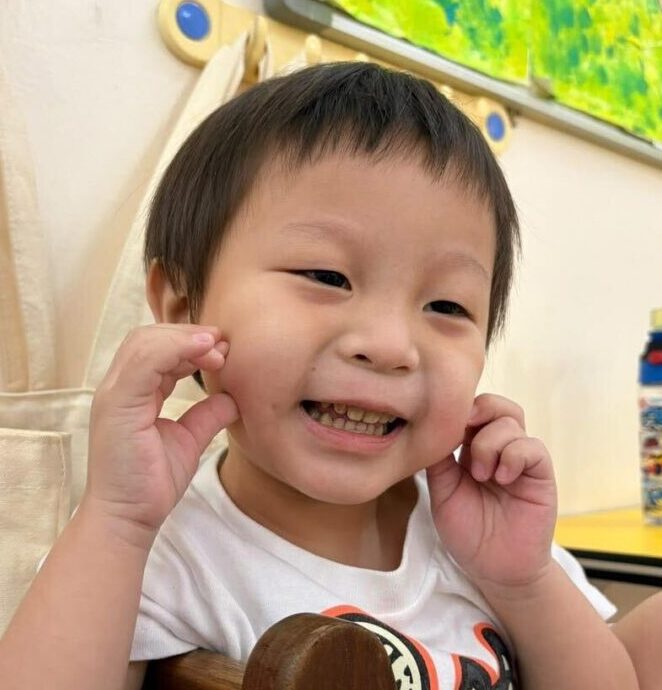
My hope for Caleb is for him to live a long life full of happiness and health. Most people say that he will not remember the surgeries and the itch because he was too little, and I’m grateful for that. His little double chin and chubby cheeks remind me that a healthy life is the enabling factor for anyone to enjoy life. I cherish his hugs and kisses, and the times when he comes over to me and holds my hand. Our journey has taught me strength and resilience, but also immense gratitude for each moment. There is so much I want to experience with our little family. The best is yet to come.
A huge thank you to Germaine and her family for sharing this story.