You’ve lived it. Now let it count.
The PFIC Network Patient Registry is an ongoing online research study for people living with Progressive Familial Intrahepatic Cholestasis (PFIC) and PFIC-related diseases. It collects not only medical information but also health-related quality-of-life data, such as how PFIC affects daily life, which may not come up during clinic visits. Your survey responses help researchers and doctors better understand the full picture of living with PFIC and develop patient-centered treatments.
⚠ Already enrolled? Please do not enroll again through this webpage. Find your follow-up link.
Be part of the progress
Participants Enrolled
Continents Represented
Participants Ages 0-17
Participants Ages 18+
Numbers last updated on: 11/06/2026

WHY IT MATTERS
In a rare disease, every person’s information counts.
Researchers studying common conditions can recruit hundreds or even thousands of people. PFIC is different. So few people live with PFIC that every person who joins, at any age, makes the picture more complete.
Your daily experience is information no lab test can capture. The Registry turns it into data researchers can study and compare.

We use questionnaires trusted by researchers around the world, such as PROMIS®, to measure itch, sleep, anxiety, quality of life, and financial strain This helps to compare PFIC to the general population.
When you join, you can choose to be contacted about other PFIC studies and clinical trials. This is optional, and taking part in any study is always your choice.

We share what we learn back to the community through publications, presentations, and updates like the ones later on this page. We NEVER share your personal information. We only share your de-identified data, and only if you agree to it.
HOW IT WORKS
Two steps. Both count.
The registry follows the same people over time. A one-time survey is like a single photo: it shows one moment. Check-ins every six months are more like a video. They show how PFIC changes as people get older, how life looks before and after a treatment or surgery, and which changes are worth paying attention to. That’s why each check-in matters as much as joining.
The registry is a research study, and joining is voluntary. First, you will read and sign an informed consent form. It explains why the registry exists, the types of things we ask, how your information is protected, and your rights as a participant, including your right to stop at any time.
Then you will answer questions about you or your child, including diagnosis, symptoms, medications, surgeries (including liver transplant), and school. Validated questionnaires also ask how PFIC affects daily life, including itch, sleep, anxiety, quality of life, and financial strain.
Parents and caregivers can join on behalf of a child. Adults living with PFIC can join for themselves.
Prefer a paper copy of your consent? You can download the consent form and return it by mail or email or ask the registry administrator to send you a copy.
Every six months from the exact date you first enrolled, you will receive an email sent from noreply@pficpatientregistry.org containing a personal link to a follow-up survey. You can also choose to get text message reminders when you fill out your enrollment survey.
One survey is a small snapshot. Very little is known about how symptoms and quality of life change as people with PFIC get older, or how they respond to treatment, and every follow-up survey helps fill that gap.

⚠ Already enrolled?
USE THE LINK IN YOUR EMAIL.
Please do not enroll again through this webpage. Your personal link connects your new answers to your earlier ones. Without it, your follow-up data cannot be linked to your history.
If it’s been at least six months since you enrolled or last completed your follow-up survey and you haven’t received a follow-up email with a new personal link:
- Check your inbox and spam folder for an email sent from noreply@pficpatientregistry.org
- If you still can’t find it, contact registry@pfic.org and we will send it again.
WHO CAN JOIN
Anyone with PFIC, BRIC, or a related diagnosis, at any age
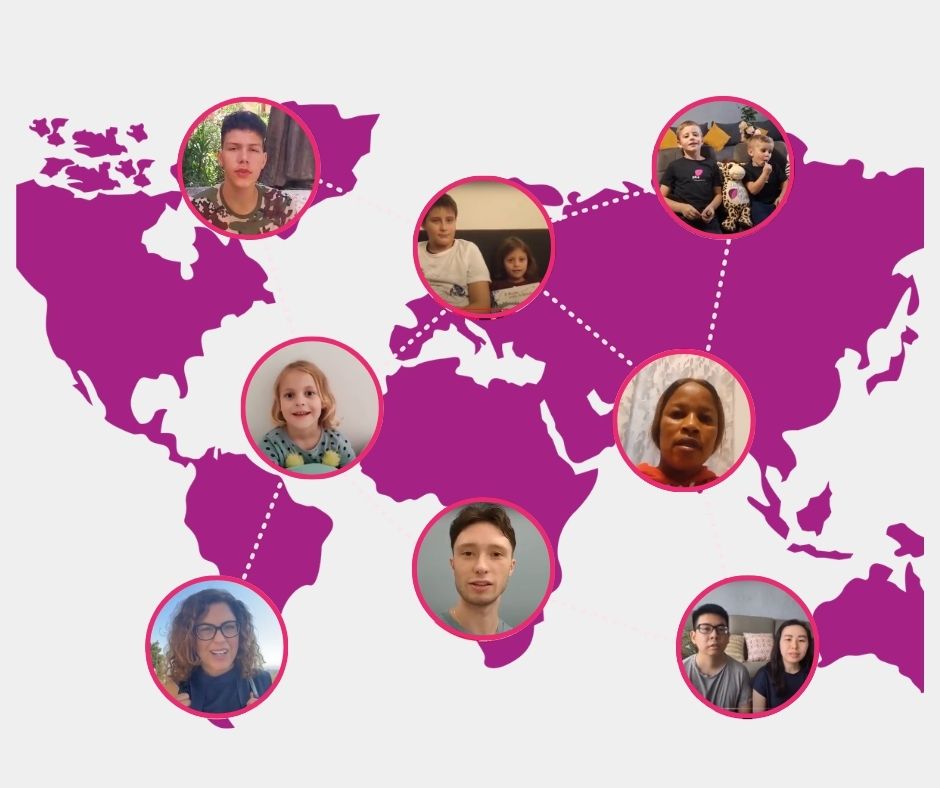
The registry is open worldwide to people with a PFIC- or BRIC-related diagnosis, and to parents or caregivers of a child with either condition. This includes people who
- Were diagnosed by gene name rather than “PFIC,” such as MDR3 (ABCB4) deficiency, also known as PFIC3
- Have a clinical diagnosis of PFIC, even without a confirmed genetic result.
- Were diagnosed with BRIC (benign recurrent intrahepatic cholestasis).
Surveys are currently in English.
Not sure if your diagnosis qualifies? Contact our registry administrator at registry@pfic.org.
You can also see the full list on our Types of PFIC page.

PRIVACY AND SECURITY
How is the registry data protected and used?
Your name and contact details are never shared with researchers. You decide whether to hear about other studies, and whether to reach out to them.
- Secure platform: The registry is hosted on REDCap, a secure, HIPAA-compliant system used by research institutions worldwide. Data are stored on a secure server (Amazon Web Services).
- Independent ethics review: An Institutional Review Board (IRB), an independent committee that protects the rights, safety, and welfare of research participants, reviews the registry every year.
- You stay in control: Your data is used in accordance with the signed Informed Consent. You can opt in or out of being contacted about studies, leave the registry, or ask for your data to be removed at any time.
Research Use
Researchers can request registry data for their research studies. A PFIC Network committee that includes people living with PFIC and parents reviews every request. The data they can receive from the registry are de-identified, which means that all personal information such as names, date of birth, and addresses have been removed.
KEY FINDINGS
What the registry data have shown so far
In January 2026, the first peer-reviewed research paper covering the registry was published in the Journal of Pediatric Gastroenterology and Nutrition. Selected findings are below:

For participants aged 0 to 18, parent-reported itch severity was associated with more sleep disturbance, lower family quality of life, and lower overall health.

60% of parents of participants aged 0 to 18 reported that someone in the family left a job, took leave, or reduced work hours because of the participant’s health, compared with 8% of U.S. families nationwide.

13.3% of PFIC families reported out-of-pocket medical costs of more than $5,000 a year, compared with about 2.9% of U.S. families. 28.9% of PFIC families reported problems paying bills, compared to 9.2% of U.S. families.
*These results were based on 161 participants enrolled by July 2025, and do not represent everyone living with PFIC. Work and cost findings came from 90 parents of participants aged 0 to 18, living in several different countries, and were compared to U.S. national survey data (National Survey of Children’s Health). Some forms of PFIC and some age groups had small numbers. Findings will become more precise as enrollment grows.
“I can’t change my daughter’s diagnosis. But I can make sure her experience counts toward something.”
– Parent of a child with BSEP deficiency (PFIC 2)
Research Impact
Publications & Presentations
Your data works for the PFIC community, and we share the results with you. Find our published research, conference presentations, and other registry resources below.
This is the first peer-reviewed article summarizing the data that are collected in our patient registry. It was a collaboration between PFIC Network and PFIC researchers and appeared in the Journal of Pediatric Gastroenterology and Nutrition in 2026.
Recorded at the 2024 PFIC Family & Scientific Conference, this presentation by Dr. Gitta Lubke offers an overview of the patient registry and shares what we had learned so far from participant data.
Registry data was presented as a poster at the North American Society for Pediatric Gastroenterology, Hepatology & Nutrition (NASPGHAN) Annual Meeting in 2024, bringing our community’s data directly to leading specialists in the field.
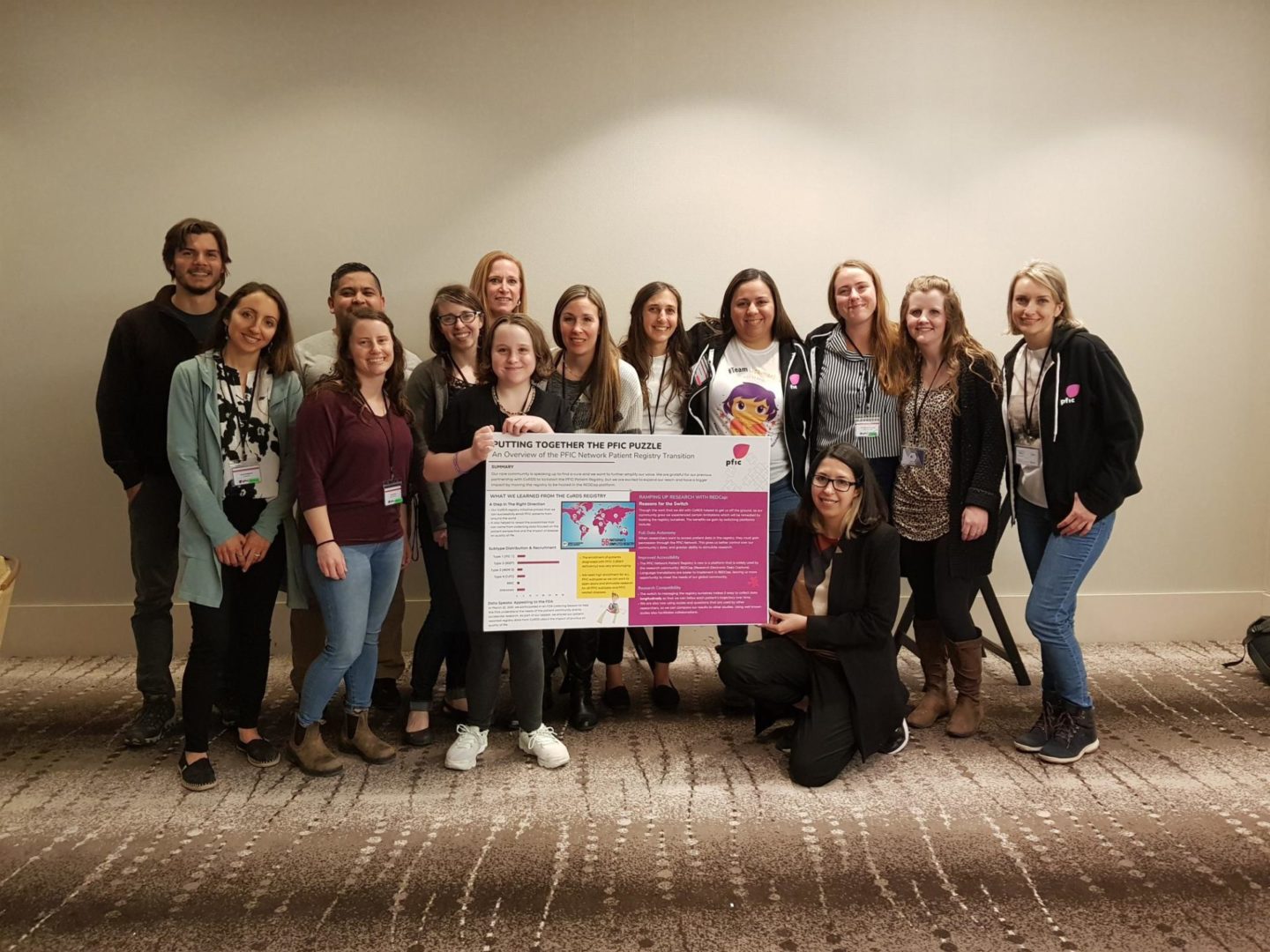
Following the 2022 registry launch, this poster, shared at the 2023 PFIC Family & Scientific Conference, presented the first data summaries from our registry to our patient and research community.

Let’s take the power back from PFIC.
Join in about 30 minutes, then check in for about 15 minutes once every six months. Your participation brings us one step closer to better understanding and better treatments for PFIC and related diseases.
ADDITIONAL INFORMATION
Frequently asked questions
Email registry@pfic.org and we will send it again. Please don’t sign up a second time, since a new record can’t be connected to your earlier answers.
In 2024, we offered the registry in Italian, Spanish, and Polish. We are grateful to everyone who took part. Because of the high cost of licensing translated questionnaires, we have discontinued these versions. All data collected has been securely archived.
If you joined a translated version and agreed to be contacted, you may still hear from us about research opportunities. To stop being contacted or to have your archived data deleted, contact us at registry@pfic.org.
If you are comfortable completing surveys in English, we encourage you to join the English version so your information stays part of future research. Contact us at registry@pfic.org with any questions.
The registry uses multiple measures from the Patient-Reported Outcomes Measurement Information System® (PROMIS®), the World Health Organization’s quality-of-life survey (WHOQOL-BREF), the Revised Impact on Family Scale, and seven questions from the National Survey of Children’s Health. Many of these let us compare people with PFIC to the general population.
Yes. Taking part is voluntary. You can stop at any time, opt out of being contacted about studies, or ask for your data to be removed.
Yes. You can download the consent form and return it by mail or email, or ask the registry administrator to send you a copy.
FOR RESEARCHERS
Request registry data
Researchers can request de-identified registry data or ask us to share a study or clinical trial with participants who have agreed to be contacted. Requests must include an IRB-approved research plan. Our team reviews requests every quarter. Requests received after a deadline are reviewed in the next cycle.
Questions? Email registry@pfic.org.
| UPCOMING SUBMISSION DEADLINES
– December 4, 2026 – March 26, 2027 – June 25, 2027 – September 24, 2027 – December 3, 2027 |