Benefits & Risks of PFIC Clinical Trials
Conference Roundtable Brief
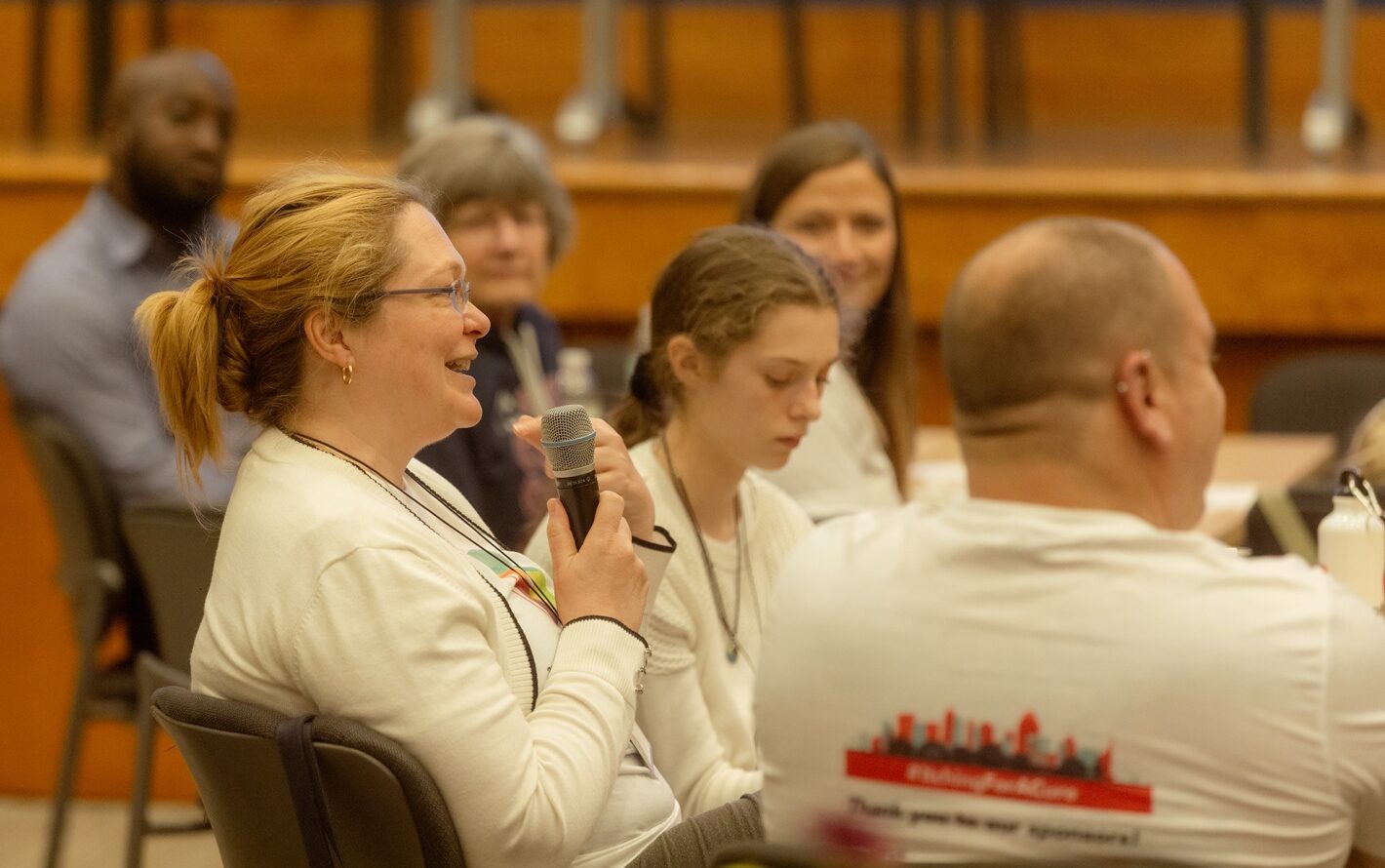
2024 PFIC Family & Scientific Conference • Cincinnati, Ohio
Overview
At the 2024 PFIC Family & Scientific Conference, PFIC Network convened the first multi-stakeholder roundtable discussion focused specifically on how patients and parents of individuals with PFIC appraise the risks and benefits of participating in clinical trials.
The discussion revealed patterns in risk tolerance with direct implications for how investigators design therapies and trials.
Patient risk tolerance: A qualitative term reflecting the extent to which a patient will accept the risk(s) of an adverse effect from a treatment for a probable benefit; risk tolerance will vary among patients, which affects individual patient decisions as to whether risks are acceptable.
–National Health Council, Glossary of Patient Engagement Terms
Discussion Summary
Who participated
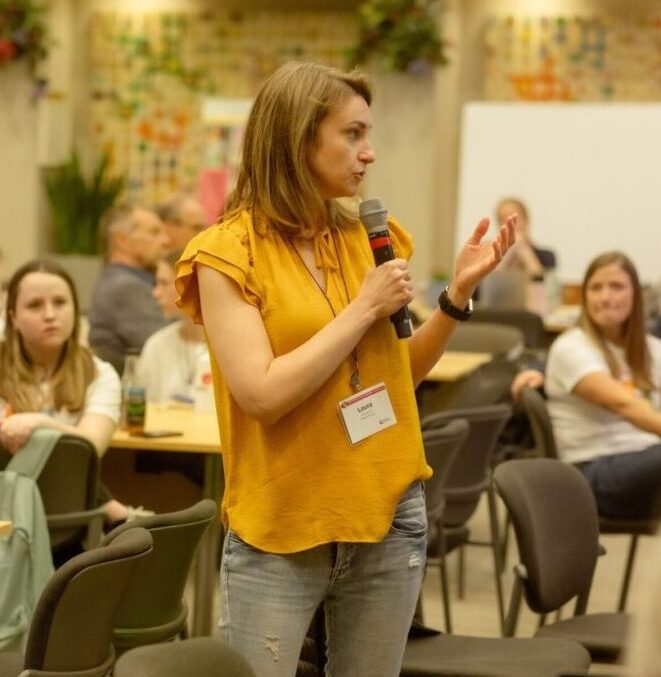
Community partners who participated in the roundtable discussion included: one adolescent patient, nine parents of patients, four physicians, two scientists, and one FDA officer. The discussion was facilitated by a parent and a clinician-scientist.
Preparation for the discussion:
Patients, parents, physicians, and scientists had two opportunities to share thoughts:
- Pre-roundtable interviews were held among participants to list discussion points and areas of interest, a few weeks prior to the conference.
- During the conference, participants attended expert talks on emerging PFIC therapies, liver transplant for PFIC, gene therapy reports for other genetic liver disorders, and ethics related to informed consent.
Key takeaways
Patients and parents shared how to weigh risk when considering novel therapies based on their experience.
-
Reversibility of clinical intervention strongly shapes risk appraisal
Multiple parent participants reported lower willingness to accept risk of their child trying a treatment with effects that cannot be undone. One adolescent patient recalled whether the pruritus was severe enough to justify transplant — and decided it wasn’t:
“The big concern was: is my itch that bad to where I get a liver transplant? I decided it wasn’t, in retrospect, compared to the cons of transplant—being immunocompromised, in the hospital a lot. My biggest concerns were (related to) irreversibility… If I try different medications, I can stop taking them. You can’t just get your old liver back.”
Reflecting their decision-making process for transplant, multiple parents reported lower willingness to participate in clinical trials when a trial treatment induces a permanent change to the health conditions of their children. Three parents took this further, stating they would not consider a new trial therapy carrying any risk of fatality unless no other options remained. One parent and one clinician independently recommended listing the degree of reversibility (transient vs. permanent effect) as the first item in clinical trial consent forms, given its weight in patients’ risk appraisal.
-
Clinical status and quality of life shift willingness to accept risk
Reversibility was not the only factor shaping patient risk tolerance. Several parents reported that their willingness to accept risk is dynamic and depends on their child’s clinical status — reporting far less willingness to take on risk when their child is stable. One parent illustrated this in the context of future gene therapy:
“Because she’s doing quite well, I don’t think we’d try gene therapy until it’s in like “Phase 4” trial. But if she got dramatically sick and it was a choice between transplant and gene therapy…my risk analysis would probably change.”
Quality of life also emerged as a factor in risk appraisal. Among parent participants who had pursued liver transplant, some reported that severely diminished quality of life from pruritus — rather than end-stage liver disease — was what ultimately drove their decision to pursue transplant, despite its irreversibility. One parent said:
“In my child’s case, (the reason we chose to transplant was) a horrible itch— it won’t kill you, but it produces an appalling quality of life for the patient and family. It was a tough decision, but it seemed simple at the time in the thick of itch.”
IMPACT
What This Means for Researchers & Investigators
These findings have implications for developing new therapies, studies, or trials for PFIC:
- Reversibility and minimal risk of death are key determining factors for patients and parents to evaluate whether to try a new therapy. Trial therapies without clear estimate of reversibility may face a constrained enrollment pool, particularly among patients who are currently stable, suggesting that investigators and drug developers may need to strengthen the evidence for the permanent effects of their trial therapies.
- Many PFIC patients and parents may become more willing to accept risk when clinical status or quality of life declines, suggesting that investigators may need to consider trial designs for clinically unstable patients, advance their technology to safely deliver drugs to a decompensating liver, or both.
What’s Next?
PFIC Network is actively exploring opportunities to disseminate these findings to drug developers, investigators, and the FDA to support the successful development of novel therapies for PFIC. The 2024 roundtable also surfaced but did not fully explore trial participation burdens and informed consent challenges — themes PFIC Network will examine in greater depth at a follow-up roundtable at the 2026 PFIC Family & Scientific Conference (Chicago, July 9–10), with particular attention to the perspectives of children and adolescent patients, to produce additional guidance for investigators designing PFIC trials.
To get involved in PFIC Network’s research program or to engage our patient and family input in your therapy or trial development, please contact us at info@pfic.org.
Acknowledgments
Contributing Authors: Melissa Kochanowsky, William Balistreri, Erik Lontok, Emily Ventura, Emily Vincent, Chunyue Yin, Akihiro Asai
Thank You: The 2024 PFIC Family & Scientific Conference was hosted in partnership with Cincinnati Children’s Hospital & Medical Center and their Undiagnosed & Rare Liver Disease Center. A big thank you to their team for their collaboration on the event, including the roundtable discussion and this summary.